Thursday, 10 May 2012

2003 Updates of Google


Florida - November 2003
This was the update that put updates (and probably the SEO industry) on the map. Many sites lost ranking, and business owners were furious. Florida sounded the death knell for low-value late 90s SEO tactics, like keyword stuffing, and made the game a whole lot more interesting.
Supplemental Index - September 2003
In order to index more documents without sacrificing performance, Google split off some results into the "supplemental" index. The perils of having results go supplemental became a hotly debated SEO topic, until the index was later reintegrated.
Fritz - July 2003
The monthly "Google Dance" finally came to an end with the "Fritz" update. Instead of completely overhauling the index on a roughly monthly basis, Google switched to an incremental approach. The index was now changing daily.
Esmerelda - June 2003
This marked the last of the regular monthly Google updates, as a more continuous update process began to emerge. The "Google Dance" was replaced with "Everflux". Esmerelda probably heralded some major infrastructure changes at Google.
Dominic - May 2003
While many changes were observed in May, the exact nature of Dominic was unclear. Google bots "Freshbot" and "Deepcrawler" scoured the web, and many sites reported bounces. The way Google counted or reported backlinks seemed to change dramatically.
Cassandra - April 2003
Google cracked down on some basic link-quality issues, such as massive linking from co-owned domains. Cassandra also came down hard on hidden text and hidden links.
Boston - February 2003
Announced at SES Boston, this was the first named Google update. Originally, Google aimed at a major monthly update, so the first few updates were a combination of algorithm changes and major index refreshes (the so-called "Google Dance"). As updates became more frequent, the monthly idea quickly died.

Google : 2002 Updates


1st Documented Update - September 2002
Before "Boston" (the first named update), there was a major shuffle in the Fall of 2002. The details are unclear, but this appeared to be more than the monthly Google Dance and PageRank update. As one webmaster said of Google: "they move the toilet mid stream".

Google Update in 2000


Google Toolbar - December 2000
Guaranteeing SEO arguments for years to come, Google launched their browser toolbar, and with it, Toolbar PageRank (TBPR). As soon as webmasters started watching TBPR, the Google Dance began.


Source:

Tuesday, 3 January 2012

Perfecting Keyword Targeting & On-Page Optimization

How Do I Build the Perfectly Optimized Page?

If you're in SEO, you probably hear this question a lot. Sadly, there's no cut and dry answer, but there are sets of best practices we can draw from and sharpen to help get close. In this blog post, I'm going to share our top recommendations for achieving on-page, keyword-targeting "perfection," or, at least, close to it. Some of these are backed by data points, correlation studies and extensive testing while others are simply gut-feelings based on experience. As with all things SEO, we recommend constant testing and refinement, though this knowledge can help you kick-start the process.
The Percectly Optimized, Keyword Targeted Page

HTML Head Tags

  • Title - the most important of on-page keyword elements, the page title should preferably employ the keyword term/phrase as the first word(s). In our correlation data studies, the following graph emerged:

    Importance of Query in Title
    Clearly, using the keyword term/phrase as the very first words in the page title has the highest correlation with high rankings, and subsequent positions correlate nearly flawlessly to lower rankings.
  • Meta Description - although not used for "rankings" by any of the major engines, the meta description is an important place to use the target term/phrase due to the "bolding" that occurs in the visual snippet of the search results. Usage has also been shown to help boost click-through rate, thus increasing the traffic derived from any ranking position.
  • Meta Keywords - Yahoo! is unique among the search engines in recording and utilizing the meta keyword tag for discovery, though not technically for rankings. However, with Microsoft's Bing set to take over Yahoo! Search, the last remaining reason to employ the tag is now gone. That, combined with the danger of using keywords there for competitive research means that at SEOmoz, we never recommend employing the tag.
  • Meta Robots - although not necessary, this tag should be sure NOT to contain any directives that could potentially disallow access by the engines.
  • Rel="Canonical" - the larger and more complex a site (and the larger/more complex the organization working on it), the more we advise employing the canonical URL tag to prevent any potential duplicates or unintentional, appended URL strings from creating a problem for the engines and splitting up potential link juice.
  • Other Meta Tags - meta tags like those offered by the DCMI or FGDC seem compelling, but currently provide no benefit for SEO with the major engines and thus, add unnecessary complexity and download time.

URL

  • Length - Shorter URLs appear to perform better in the search results and are more likely to be copied/pasted by other sites, shared and linked-to.
  • Keyword Location - The closer the targeted keyword(s) are to the domain name, the better. Thus, site.com/keyword outperforms site.com/folder/subfolder/keyword and is the most recommended method of optimization (though this is certainly not a massive rankings benefit)
  • Subdomains vs. Pages - As we've talked about previously on the blog, despite the slight URL benefit that subdomains keyword usage has over subfolders or pages, the engines' link popularity assignment algorithms tilt the balance in favor of subfolders/pages rather than subdomains.
  • Word Separators - Hyphens are still the king of keyword separators in URLs, and despite promises that underscores will be given equal credit, the inconsistency with other methods make the hyphen a clear choice. NOTE: This should not apply to root domain names, where separating words with hyphens is almost never recommended (e.g. pinkgrapefruit.com is a far better choice than pink-grapefruit.com).

Body Tags

  • Number of Keyword Repetitions - It's impossible to pinpoint the exact, optimal number of times to employ a keyword term/phrase on the page, but this simple rule has served us well for a long time - "2-3X on short pages, 4-6X on longer ones and never more than makes sense in the context of the copy." The added benefit of another instance of a term is so miniscule that it seems unwise to ever be aggressive with this metric.
  • Keyword Density - A complete myth as an algorithmic component, keyword density nonetheless pervades even very sharp SEO minds. While it's true that more usage of a keyword term/phrase can potentially improve targeting/ranking, there's no doubt that keyword density has never been the formula by which this relevance was measured.
  • Keyword Usage Variations - Long suspected to influence search engine rankings (though never studied in a depth of detail that's convincing to me), the theory that varied keyword usage throughout a page can help with content optimization and optimization nevertheless is worth a small amount of effort. We recommend employing at least one or two variations of a term and potentially splitting up keyword phrases and using them in body copy as well or instead.
  • H1 Headline - The H1 tag has long been thought to have great importance in on-page optimization. Recent correlation data from our studies, however, has shown that it has a very low correlation with high rankings (close to zero, in fact). While this is compelling evidence, correlation is not causation and for semantic and SEO reasons, we still advise proper use of the H1 tag as the headline of the page and, preferrably, employment of the targeted keyword term/phrase.
  • H2/H3/H4/Hx - Even lower in importance than the H1, our recommendation is to apply only if required. These tags appears to carry little to no SEO value.
  • Alt Attribute - Surprisingly, the alt attribute, long thought to carry little SEO weight, was shown to have quite a robust correlation with high rankings in our studies. Thus, we strongly advise the use of a graphic image/photo/illustration on important keyword-targeted pages with the term/phrase employed in the alt attribute of the img tag.
  • Image Filename - Since image traffic can be a substantive source of visits and image filenames appear to be valuable for this as well as natural web search, we suggest using the keyword term/phrase as the name of the image file employed on the page.
  • Bold/Strong - Using a keyword in bold/strong appears to carry a very, very tiny amount of SEO weight, and thus it's suggested as a best practice to use the targeted term/phrase at least once in bold, though a very minor one.
  • Italtic/Emphasized - Surprisingly, italic/emphasized text appears to have a similar to slightly higher correlation with high rankings than bold/strong and thus, we suggest its use on the targeted keyword term/phrase in the text.
  • Internal Link Anchors - No testing has yet found that internal anchors are picked up/counted by the engines.
  • HTML Comments - As above, it appears the engines ignore text in comments.

Internal Links & Location in Site Architecture

  • Click-Depth - Our general recommendation is that the more competitive and challenging a keyword term/phrase is to rank for, the higher it should be in a site's internal architecture (and thus, the fewer clicks from the home page it should take to reach that URL).
  • Number/Percentage of Internal Links - More linked-to pages tend to higher rankings and thus, for competitive terms, it may help to link to these pages from a greater number/percentage of pages on a site.
  • Links in Content vs. Permanent Navigation - It appears that Google and the other engines are doing more to recognize location on the page as an element of link consideration. Thus, employing links to pages in the Wikipedia-style (in the body content of a piece) rather than in permanent navigation may potentially provide some benefit. Don't forget, however, that Google only counts the first link to a page that they see in the HTML
  • Link Location in Sidebars & Footers - Recent patent applications, search papers and experience from inside SEOmoz and many practitioners externally suggests that Google may be strongly discounting links placed in the footer, and, to a lesser degree, in the sidebar(s) of pages. Thus, if you're employing a link in permanent navigation, it may pay to use the top navigation (above the content) for SEO purposes.

Page Architecture

  • Keyword Location - We advise that important keywords should, preferably, be featured in the first few words (50-100, but hopefully even sooner) of a page's text content. The engines do appear to have some preference for pages that employ keywords sooner, rather than later, in the text.
  • Content Structure - Some practitioners swear by the use of particular content formats (introduction, body, examples, conclusion OR the journalistic style of narrative, data, conclusion, parable) for SEO, but we haven't seen any formal data suggesting these are valuable for higher rankings and thus feel that whatever works best for the content and the visitors is likely ideal.

Why Don't We Always Obey These Rules?

That answer is relatively easy. The truth is that in the process of producing great web content, we sometimes forget, sometimes ignore and sometimes intentionally disobey the best practices laid out above. On-page optimization, while certainly important, is only one piece of a larger rankings puzzle:
Google's Ranking Algorithm Components
(FYI - The new ranking factors survey data is set to release very, very soon)
It most certainly pays to get the on-page, keyword-targeting pieces right, but on-page SEO, in my opinion, follows the 80/20 rule very closely. If you get the top 20% of the most important pieces (titles, URLs, internal links) from the list above right, you'll get 80% (maybe more) of the value possible in the on-page equation.

Best Practices for Ranking #1

Curiously, though perhaps not entirely surprisingly to experienced SEOs, the truth is that on-page optimization doesn't necessarily rank first in the quest for top rankings. In fact, a list that walks through the process of actually getting that first position would look something more like:
  1. Accessibility - content engines can't see or access cannot even be indexed; thus crawl-ability is foremost on this list.
  2. Content - you need to have compelling, high quality material that not only attracts interest, but compels visitors to share the information. Virality of content is possibly the most important/valuable factor in the ranking equation because it will produce the highest link conversion rate (the ratio of those who visit to those who link after viewing).
  3. Basic On-Page Elements - getting the keyword targeting right in the most important elements (titles, URLs, internal links) provides a big boost in the potential ability of a page to perform well.
  4. User Experience - the usability, user interface and overall experience provided by a website strongly influences the links and citations it earns as well as the conversion rate and browse rate of the traffic that visits.
  5. Marketing - I like to say that "great content is no substitute for great marketing." A terrific marketing machine or powerful campaign has the power to attract far more links than content may "deserve," and though this might seem unfair, it's a principle on which all of capitalism has functioned for the last few hundred years. Spreading the word is often just as important (or more so) than being right, being honest or being valuable (just look at the political spectrum).
  6. Advanced/Thorough On-Page Optimization - applying all of the above with careful attention to detail certainly isn't useless, but it is, for better or worse, at the bottom of this list for a reason; in our experience, it doesn't add as much value as the other techniques described.
As always, I'm looking forward to hearing your thoughts and experiences about the specific recommendations above and the general concept of the "perfectly" optimized page.


source:
http://www.seomoz.org/blog/perfecting-keyword-targeting-on-page-optimization

Monday, 2 January 2012

Way of off page optimization

Off page optimization is off site optimization of website that is independent of internal part of Website and done on other website to increase search engine ranking. There is many ways of doing
Off page optimization. They include:

1. Directory submission
2. Article submission
3. Forum posting
4. Blog comment
5. Social networking of bookmaking

There is many other way too. The main reason of doing off page optimization is analyzing the off page Optimization technique of top ranked website with similar or same keywords. The top ranked website Of similar keyword help greatly in SEO. Copy the way of off page optimization of top ranked website and try yourself to do better than them. Copying their technique in better way help to increase page rank more than them.

If the website with keyword “SEO tips” is brand new then for optimization of the website analyze the top ranked website for this website analyze the top ranked website for the keyword “website  Marketing and advertisement”. Search for this keyword in search in search engine. You will get list of website .select any one of the top ranked website and analyze it properly. In course try to find out how many website is linked to that site.
You can also know the website linked to them. You can view how many website is linking to that  website at the bottom of Google search. You will see Result 1-10 of about 500 linking to that website.

Also find out the Google page rank of that website linked to them. Find the page title of website Linking to them along with anchor text. Do this for any one of the website linking to that website which you are analyzing to find out the number and type of link which is linked to the website that is linking to them. You can see number of link linked. Also find out the IP address of webpage linked to them. Use Google tools for that. Find IP address of URL you are analyzing. The variety in IP Address of link linked with the website will be proved beneficial to the web owner as it will directly help to drive traffic or visitors. so if possible get link from more IP address. Also find out outbound links of website that is linked to your own website.

After you analyzed one of the website fully do the same process for other top ranked too. This will be long process and time consuming. But keep in mind that this is important too. Do the process for about 10 top ranked website and copy their optimization way in better way so that you can even rank more than them.
You can also use tools for this purpose to complete this task in short time, but these tools are not free. You have to purchase them.

You can online rank higher in search engine if you do off page optimization in proper manner. For this analyze the optimization technique in even better way.


source:
http://pratikkoirala.com.np/search-engines/way-of-off-page-optimization-to-get-on-the-top-of-google.html

Friday, 23 December 2011

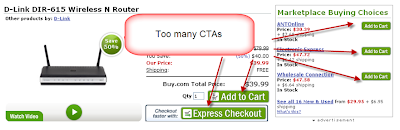
25 Google Website Optimizer Tips For Better Product Pages


Wednesday, 21 December 2011

51 SEO points for OnPage Optimization


  1. Place your keyword phrases at title tag. Title must be less than 65 characters.
  2. Place the most important keyword phrase close the beginning of the page title.
  3. Put some main keyword in keyword meta tag.
  4. Write a good description for meta description tag, description must be unique to each page.
  5. Keep Meta description short and meaningful write only 1 or 2 sentences in description.
  6. Target the most important competitive keyword phrase at the home page.
  7. Target one or two keywords phrases per page.
  8. Use only one H1 header per page.
  9. Place the most important keyword in H1 tag.
  10. Use H2 and H3 for sub headers where required.
  11. Use Bold / Italic / Underline for your keyword phrase for extra weight in contents.
  12. Use bulleted lists to make content easier to read.
  13. Use ALT tag for images, so that crawler can know about images.
  14. Don’t use flash on your website because crawler can’t read flash.
  15. Try to keep easier navigation of your website.
  16. Use text based navigation.
  17. Use CSS to creating navigation menu instead of JavaScript.
  18. Use keyword phrases in file name, you can use hyphens (-) to separate the word in file names.
  19. Create a valid robot.txt file.
  20. Create a HTML site map for crawler and user.
  21. Create a XML site map for Google crawler.
  22. Add text links to others page in the footer of site.
  23. Use keyword phrase in Anchor text.
  24. Link the entire pages to each others.
  25. Use keyword rich breadcrumb navigation to help search engines understand the structure of your site.
  26. Add a feedback form and place a link to this form from all the pages.
  27. Add bookmark button.
  28. Add a subscription form at every page for increasing your mailing list.
  29. Add RSS feed button so that user can subscribe easily.
  30. Add Social Media sharing button.
  31. Use images on every page but don’t forget to use ALT tag.
  32. Use videos on your site which is related to your niche.
  33. Write informative, fresh, unique, useful content on your site.
  34. Write site content in between 300 to 500 words.
  35. Keywords % must be 3 to 5%.
  36. Don’t copy any content from other websites, fresh and unique content is the key of your success.
  37. Add deep link to related articles.
  38. Regular update your website with fresh content.
  39. Use CSS to improve the look of your website.
  40. Write your content for human not for robot.
  41. Buy Country Level Domain name if your website is targeting local users.
  42. Use a good keyword suggestion tools to finding good keywords phrases for your website.
  43. Use 301 redirection to redirect http://www.domainname.com to http://domainname.com.
  44. Try to buy local hosting server for your website if your site is targeting local people.
  45. Use keywords rich URL instead of dynamic URL.
  46. Break your article in paragraph if your article is long.
  47. Add full contact address on contact page with direction map.
  48. Validate XHTML and CSS at http://validator.w3.org/ .
  49. Don’t use hidden text or hidden links.
  50. Avoid graphic links, because text in the image can not be indexed by the spiders.
  51. Don’t create multi page for with same contents.

Source:

Friday, 16 December 2011

SEO vs social media optimization


There’s a never-ending debate as to which of these two is more important. Well, SEO is important because it attracts people to your blog or website, where you want them to land up. Similarly, if you have a well-optimized social media profile, there are chances of ranking high in the search engines. That’s because social media websites are themselves optimized and they help to bring a lot of incoming links to your site/blog.

However, social media may not take into account certain factors which search engines consider while making your content visible to others on the web. What I mean is, search engines do have algorithms based on which they’ll consider whether or not to rank your web page in a certain position. But with social media, you make your content visible to a wide range of web users. Here, the search engine algorithms have no role to play. However, the content quality should be high, as because you won’t have too many people spreading the word about it across social media networks.

So, the fact remains that both SEO and SMO contribute towards making people view your content more, thus driving in more traffic to your website/blog and helping you to convert them into regular visitors or leads. Whether you’ll give more emphasis on SEO or SMO depends on the goals you have, the kind of traffic you’re looking for and what you want the traffic to do for you. The key is to make the best use of both processes. In fact, it is possible to make both of them work for you as they have more similarities than differences.


Saturday, 8 October 2011

Article Submission for SEO

Article submission for SEO purpose is the most important factor today to gain maximum search engine exposure and targeted visitors to your website. Ignore this fact and your website may suffer in the long run and you will have to put more hard work to improve your website rankings later on.
Most webmasters and online business owners think that SEO article writing and submission is very hard and time consuming task. In reality, if you are focused and actually know your website purpose then producing SEO optimized articles and SEO article submission is not that difficult or time consuming.
If you cannot produce these types of articles on your own then you can easily outsource them by utilizing professional SEO article writing services online. To improve your search engine rankings and to gain maximum benefits from article submission for SEO, you need to master the following 3 factors:

1)  Quality keyword research

Before building your own website, the first thing you need to focus is to find the most searched keywords in your niche and to find the relevant topic to that keyword. E.g. If you choose acne niche for your new website then you must further drill down to find the most searched keywords which are also less competitive in nature.
Focus on solving specific kinds of problems faced by people in your niche. E.g. “remedies for back acne” is more focused keyword and rather much specific problem faced by people. You can use popular keyword research tools provided by Google and Yahoo for your research.
Once you find the right keyword then you can easily perform the content research by gathering basic facts and figures required to produce your website content. Gather relevant information from high respected websites in your niche. This will give your articles much more authority from the search engine perspective.

2) Quality Article Writing

To enhance the effectiveness of your articles, your articles must include keywords at right places like in your article title, the first paragraph, the conclusion part and article summary. The acceptable keyword density is 2-3% according to latest search engine algorithm changes. Latent Semantic Indexing (LSI) is another SEO tactic which must be incorporated in your every article.
Your article must contain minimum 400-500 words for maximum search engine exposure and to improve the overall content quality of your article. There are other less known SEO factors which you can research on the Internet to further improve the efficiency of your articles.

3) Effective article submission strategy

Today there are literally thousands of article directories available on the internet. Your first task is to identify the most popular and the search engine friendly article submission sites. Do not waste your time on submitting your content to less effective websites. You must focus on the article directories which have already established loyal reader base and search engine spiders must regularly visit these sites.
You can use article submission service offered by popular and reliable SEO content submission service providers in order to reduce your submission time and to gain faster search engine exposure.


source:
http://www.howtospoter.com/web-20/seo/article-submission-for-seo

Friday, 23 September 2011

49 Ways to Build Your Brand Using Online Marketing

Building a brand from scratch is not an easy thing to do, especially if you are in a market that is very competitive. How does one start to rise above the noise to distinguish themselves as a heavy hitter? What techniques and tricks can you use to reach your brand awareness goals? Below I have outlined some of the most effective ways to build your brand using online marketing techniques.
Video Marketing:
1. Create videos that research proves will do well on the sites you are marketing to. Usually funny videos and tutorials tend to do well.
2. Decide what video marketing stance you are going to approach with your video marketing: Cut the video and add branding before something funny or interesting happens to redirect the viewer to your site. Or allow the entire video shown to allow for more viewers and impressions.
3. Initiate streaming rich media ads on videos.
4.Purchase pre-roll or post-roll ads on videos.
5. Distribute your video across these multiple video sharing sites.
Conversational Marketing
6. Leverage sites like Sponsored Reviews in order to create a viral buzz online regarding your brand.
7. Join as many forums as you can adequately sustain a quality contributor.
8. Get to know who the industry voice is for your niche and post comments on there blogs.
9. Contribute to online groups like google groups and myspace groups.
10. Market yourself by adding a blog.
11. Use advanced techniques to gain RSS subscribers for maximum exposure.
Pay Per Click
12. If you have a larger budget create an account on the top tier pay per click networks, Google, MSN and Yahoo!.
13. If you have a smaller ad budget go with Google and some tier 2 and tier 3 networks.
14. A great way to get branding is to get those impressions. Try giving 3rd tier networks a try but know that conversions may be lower on 3rd tier networks.
15. Utilize keycompete to get a good base on competitor PPC advertising.
16. Do extensive keyword research to find optimal exposure and converting keywords.
17. Try to find niches and keyword markets to target that are not as heavily competitive but are highly trafficked so your cost per click will be way down.
18. Mind your ad quality.
Social Media Marketing
19. Stay as ethical as you possibly can.
20. To successfully leverage your social media for online marketing you need to really be active in your communities, ergo is best to have power accounts on a few social media sites rather then trying to manage many of them across multiple networks. Find your niche.
21. Initiate social bookmarking campaigns online.
22. Create content to support edits in wikipedia.
Email Marketing
23. Team with companies with double opt in lists
24. Sponsor mailing lists with companies who have a wide subscriber base.
25. Try to leverage DBA lists
26. Setup a network of sites geared towards lead generation. By capturing these leads you can use them for yourself or sell them to leading lead brokers.
Mobile Search Marketing
28. Develop a mobile version of your site.
29. Include jump links below your content as normal navigation on a mobile search page can cause problems when viewing on mobile devices.
Search Engine Optimization
30. Optimize all title tags and meta data according to your rev mix.
31. If you are having problems ranking internal pages for there given keyword terms consider developing an effective silo.
32. Develop search engine friendly html sitemap.
33 Develop quality internal linking structure.
34. Create optimized html source code.
35. Create optimized robots.txt
36. Create optimized XML sitemap.
Affiliate Marketing
37. Create accounts in the 2 major affiliate networks, link share and commission junction.
38. Evaluate your competitions affiliate program
39. If you do not have an affiliate option for your services or products then think about creating one because the chance to have others advertise your products and services is a great way to get exposure and build your branding.
40. Incentavize your affiliate deals to attract the affiliate and the consumers.
Banner Advertising
41. Examine potential sites demographics.
42. Get media break outs
43. Consider Portal Advertising
44. Weight your cost per acquisition model between the cost of CPM and CPC banner advertising.
Application Marketing
45. Create a marketing campaign on Instant messangers
Contextual Advertising
46. Initiate a PFI (pay for inclusion) campaign for in bound links with sites likeText Link Brokers.
47. Consider Pre Sale pages or Hosted Marketing packages.
On to offline Marketing
48. Clothing is one of the best ways to market a product and service on and offline. By creating clothing that is branded with your logo and services you can ad this clothing line to online shopping sites and having people wear your clothes with your branding obviously increases your brand awareness.
My last and final tip is to make sure that everything you do can be tracked and measured via an accurate web analytics system. If you can afford it I would recommend click tracks. If that is to expensive for you then you might consider web trends. Many of these tips can not only improve your online marketing success but can increase the value of your own site allowing you to be paid much more for your sponsored reviews..


source:
http://blog.sponsoredreviews.com/?p=67